Simon Jacob Memorial Education Centre
Webequie First Nation, ON
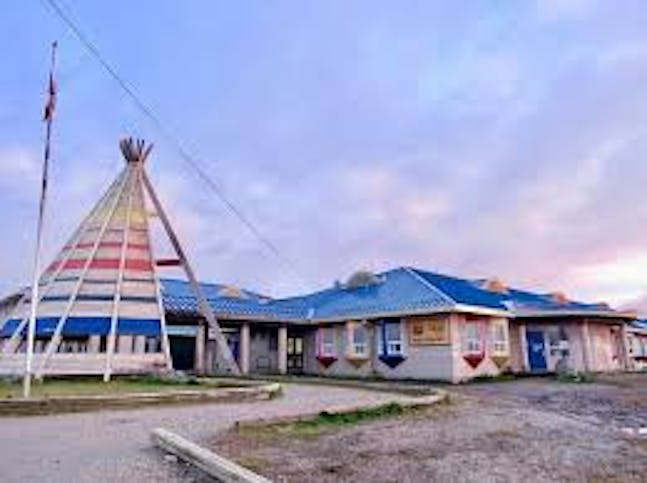
Simon Jacob Memorial Education Centre is located in Webequie First Nation. Webequie First Nation is a growing Oji-Cree community in northern Ontario. Webequie is surrounded by the beautiful Winisk River and Canadian boreal forest. Located 540 km north of Thunder Bay, Webequie is only accessible by air year-round and by ice road during the winter months.
Webequie is a close-knit and friendly community with nearly 1,000 community members living on-reserve. The people continue to embrace traditional cultural practices and speak their native language of Oji-Cree.
Details
Population of Webequie First Nation
935 (2021)
Languages Spoken
Oji-Cree
English
Grades
Kindergarten - Grade 12
About Simon Jacob Memorial Education Centre
SJMEC is a band-operated school offering Kindergarten through Grade 12 to the community of Webequie First Nation. SJMEC is run by the Webequie First Nation Education Authority (WEA) under the direction of Chief and Council. The school is designed to promote a sense of pride of heritage to the students
Mission
WEA recognizes the need to control their own education system. The involvement of the community in the school is of utmost importance in locally controlled education. WEA is committed to providing the best possible education to its students. Culturally relevant content, teaching techniques, and materials will be emphasized throughout the school program. Emphasis on the development of positive cultural identity will be integrated into school activities. WEA is dedicated to the concepts of mutual respect for all people, young and old. This dedication provides each child with a sense of acceptance and value. By recognizing an individual’s worth and dignity, Simon Jacob Memorial Education Centre can present each student with the opportunity to experience and learn the responsibility of caring and respecting others.
Vision
The education of our children is our responsibility. We want to renew and revitalize the dignity and harmony of our people. We want to reflect our traditions, language, and way of life. We want education to carry out the teaching and wisdom of our peoples in all walks of life. It is through education that we as Indigenous people will rise once again to self-sufficiency, both individually and collectively. It is also through education that our children will be provided with a strong sense of positive identity as Indigenous people.
Values
SJMEC recognizes and follows the traditional cultural teachings of Anishinaabe people. The Seven Grandfathers are respect, love, courage, wisdom, humility, honesty and truth. These teachings guide us as educators and administrators.
Respect
Having high expectations for Indigenous students and honouring their culture, language and world view in our school, community and society.
Love
Demonstrating our belief as educators that all students are competent learners and will succeed through our dedication and commitment to diverse learning perspectives.
Courage
Committed to change and transformation through critical pedagogy that includes the contributions, innovations and inventions of Indigenous people (i.e. skills, knowledge, values and perspectives).
Wisdom
Sharing effective practices in Indigenous education through ongoing professional development and research that focuses on reflective, critical and transformative change.
Humility
Acknowledges that we need to learn more about the diversity of Indigenous people and access key First Nation resources to enhances Indigenous perspectives and world view.
Honesty
Accepting that we have much to learn from one another and review the factors involved to encourage change in the education system through the development of mutual partnerships between the school, home, community and equitable stakeholders.
Truth
Developing measurable outcomes for Indigenous student success and using evidence as key indicators to enhance curriculum and pedagogical practices from an Indigenous perspective.